01
Start with how you will use them
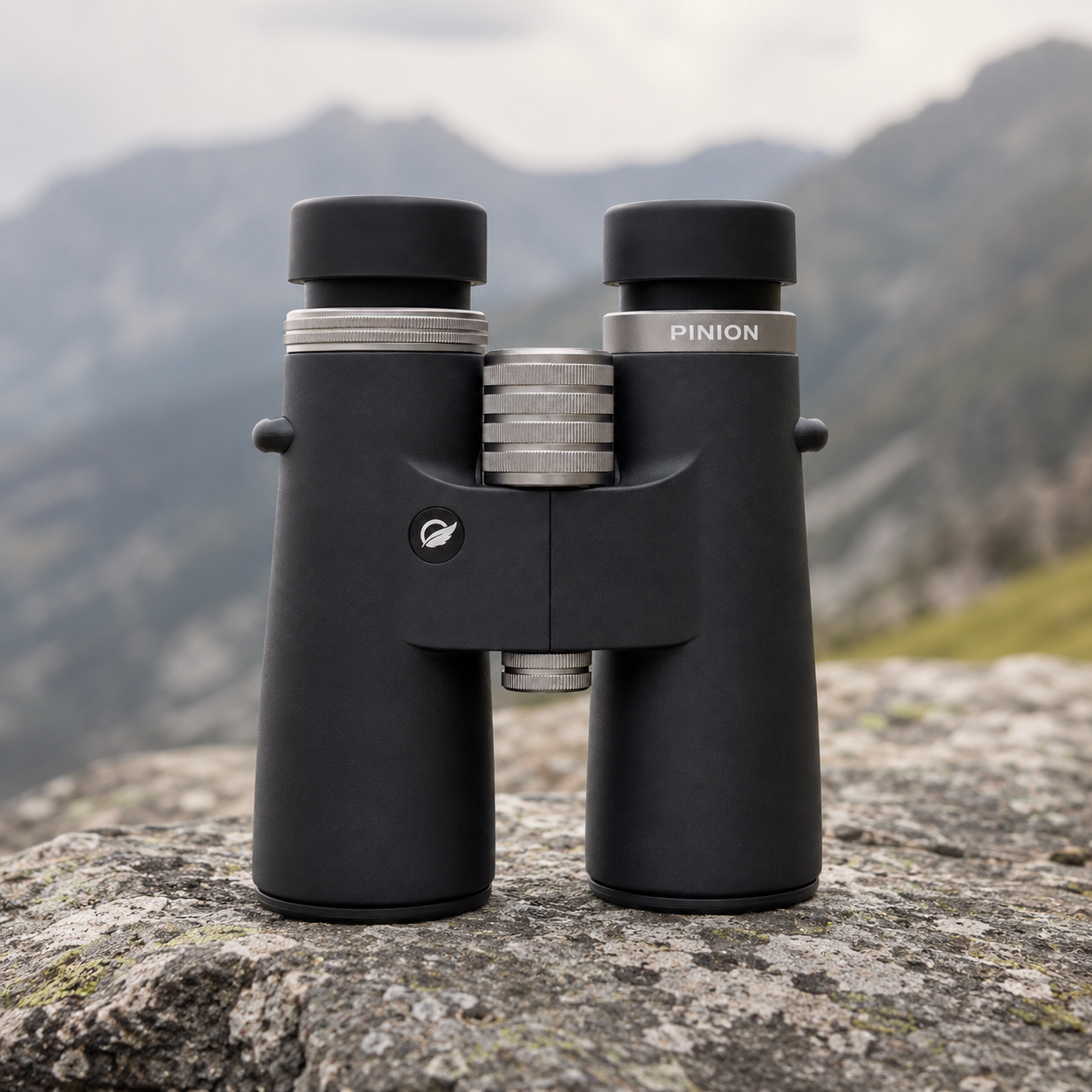
Wildlife, travel and sport all reward slightly different specifications. Wildlife watchers typically favour 8×42 for a bright, steady view. Travellers gravitate to compact 8×32 or 8×25. Sport spectators and plane spotters often prefer 10×42 or 10×50 for extra reach.
Pick your main activity below and we will suggest a specification, explain why, and show the Pinion models that fit.
Our recommendation for bird spotting
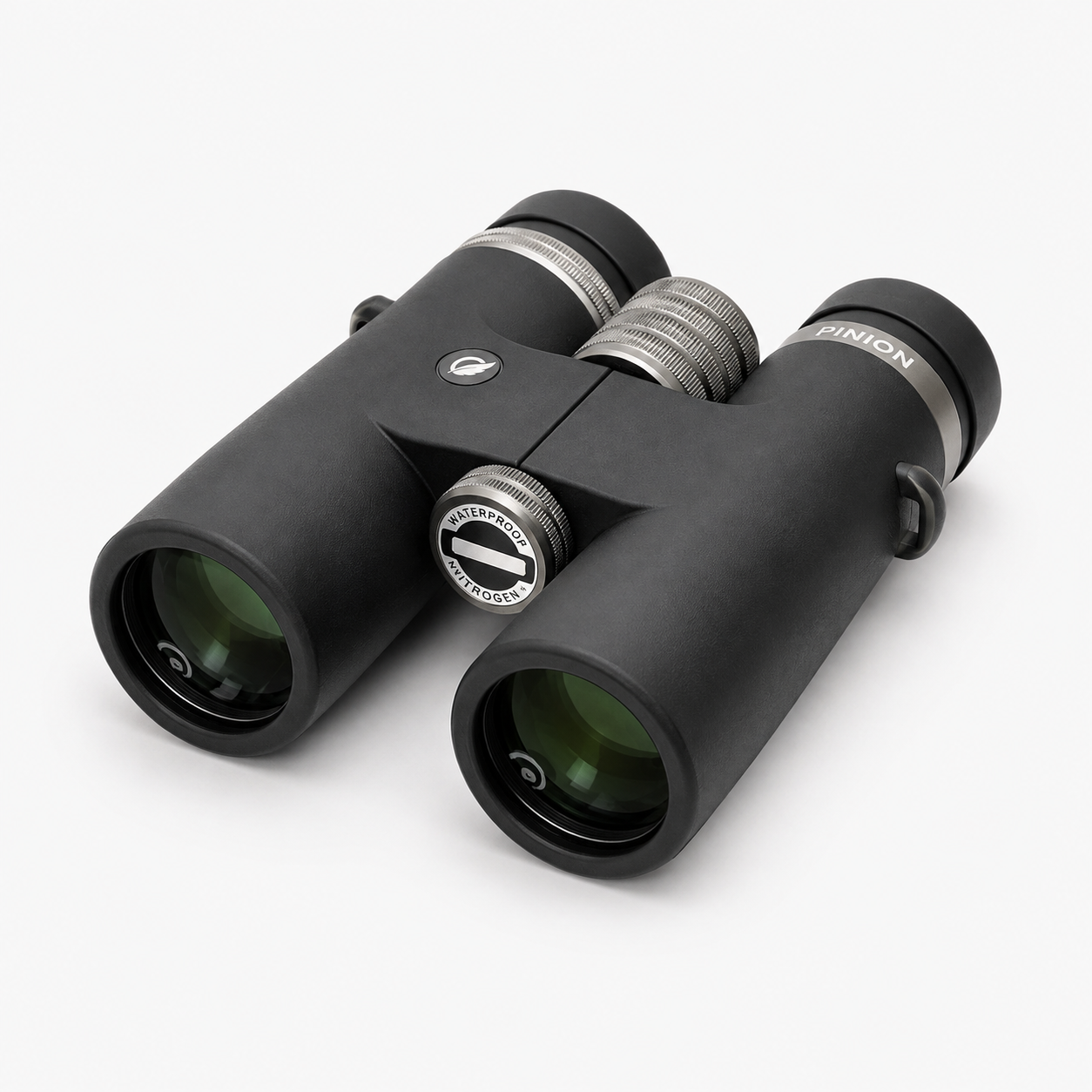
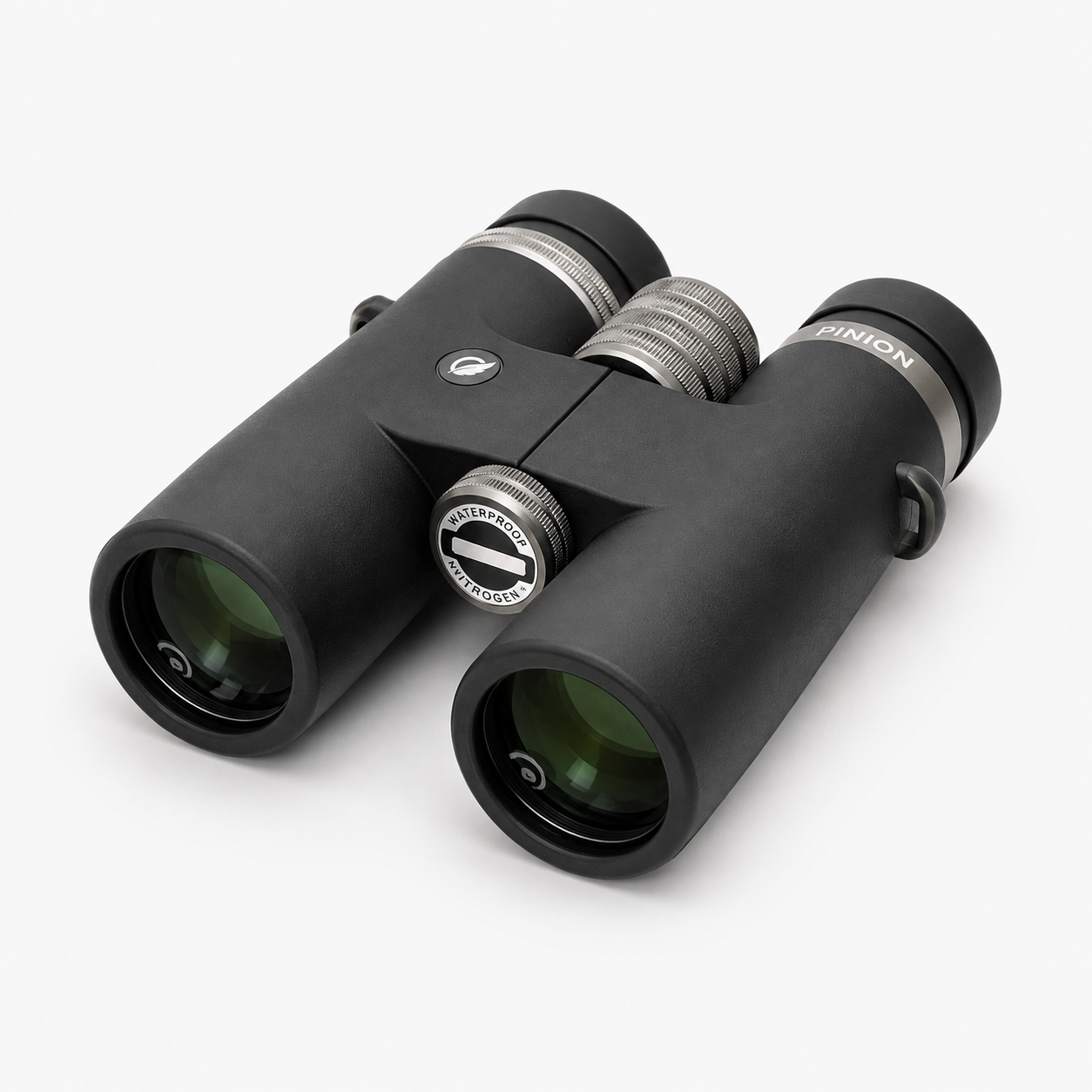
8×42 ED
Wide field to get on the bird quickly, a 5mm exit pupil for dawn and dusk, and ED glass to kill fringing on birds against the sky.
Also consider: 10×42 ED for estuaries and open water
02
Understand magnification
Higher magnification is not always better. Above 10× the view starts to shake in the hand, the field of view narrows and the image gets dimmer. For hand held use, 8× and 10× are the sweet spot.
Drag the slider to feel the trade off for yourself.
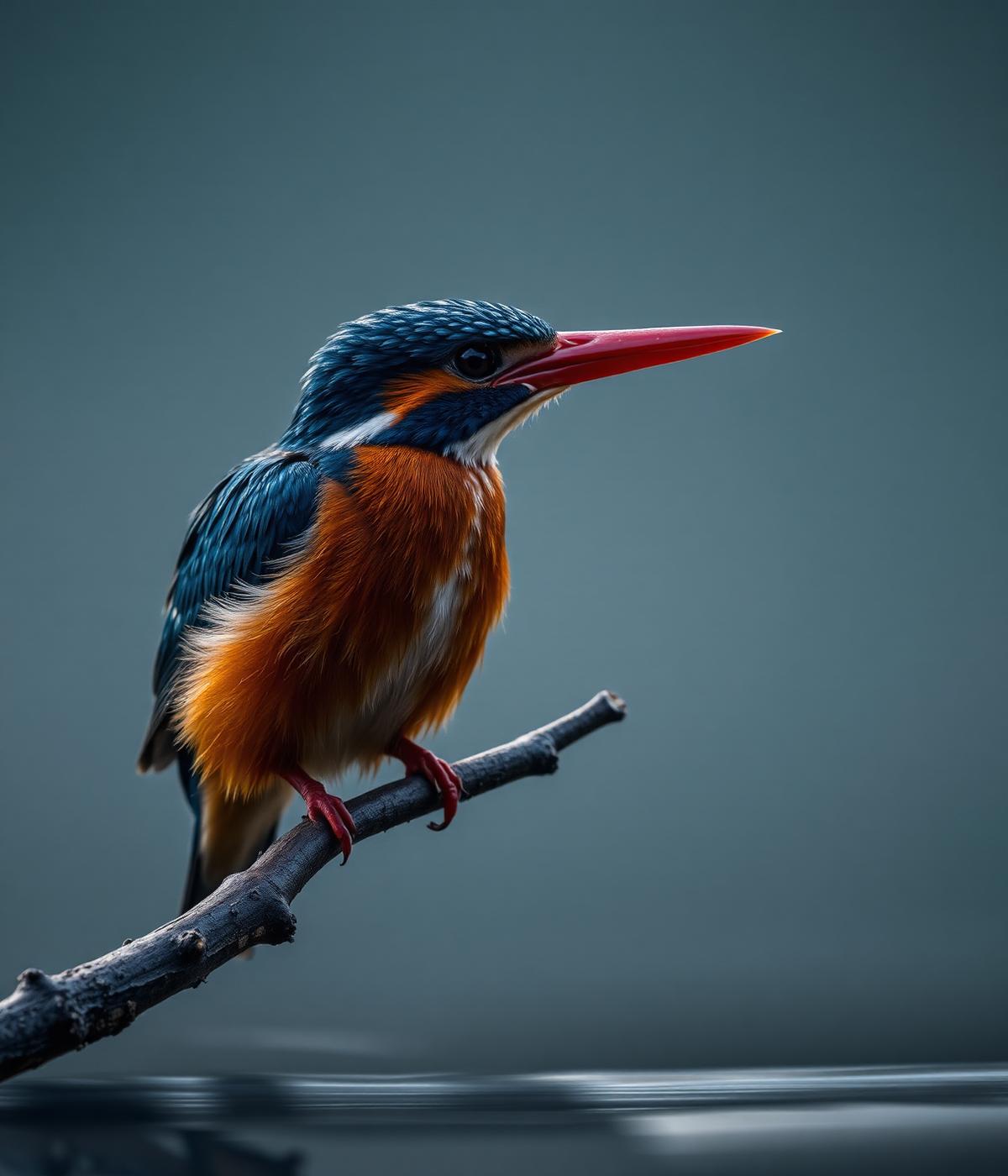
Wide, bright and easy to hold steady. Ideal for finding and following moving subjects.
03
Objective lens size and brightness
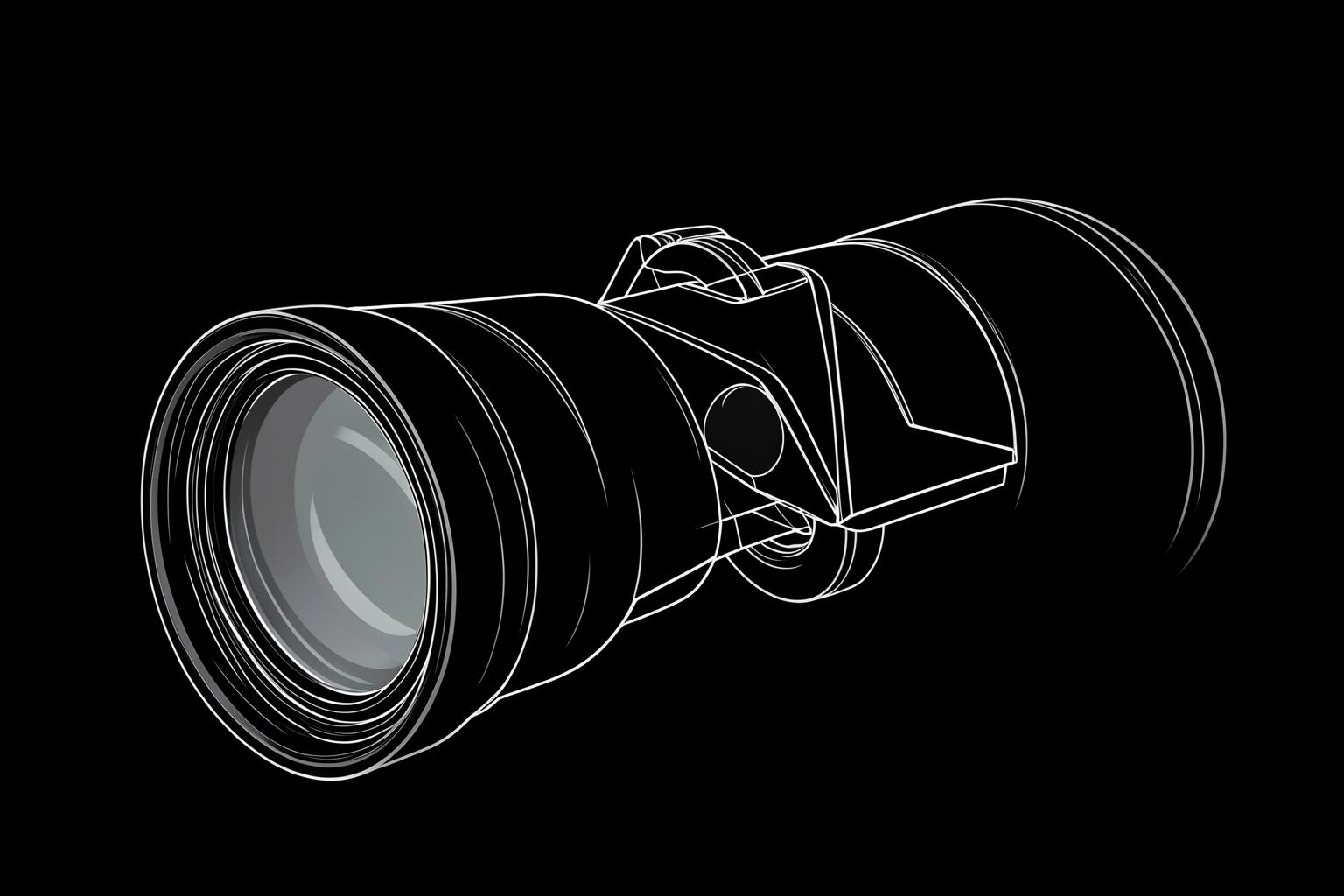
The second number is the objective lens diameter in millimetres. Larger objectives gather more light and give a brighter image, especially at dawn and dusk, but they add weight. A 42mm objective is the classic all round choice. 32mm binoculars are noticeably lighter and better for travel. 50mm models shine in low light.
Your pupil
about 6mm at dusk
Exit pupil
42 ÷ 8 = 5.3mm
The beam is narrower than your pupil, so the view will look dimmer than the naked eye scene.
Magnification
Objective lens
Light
8×42 gives a 5.3mm exit pupil
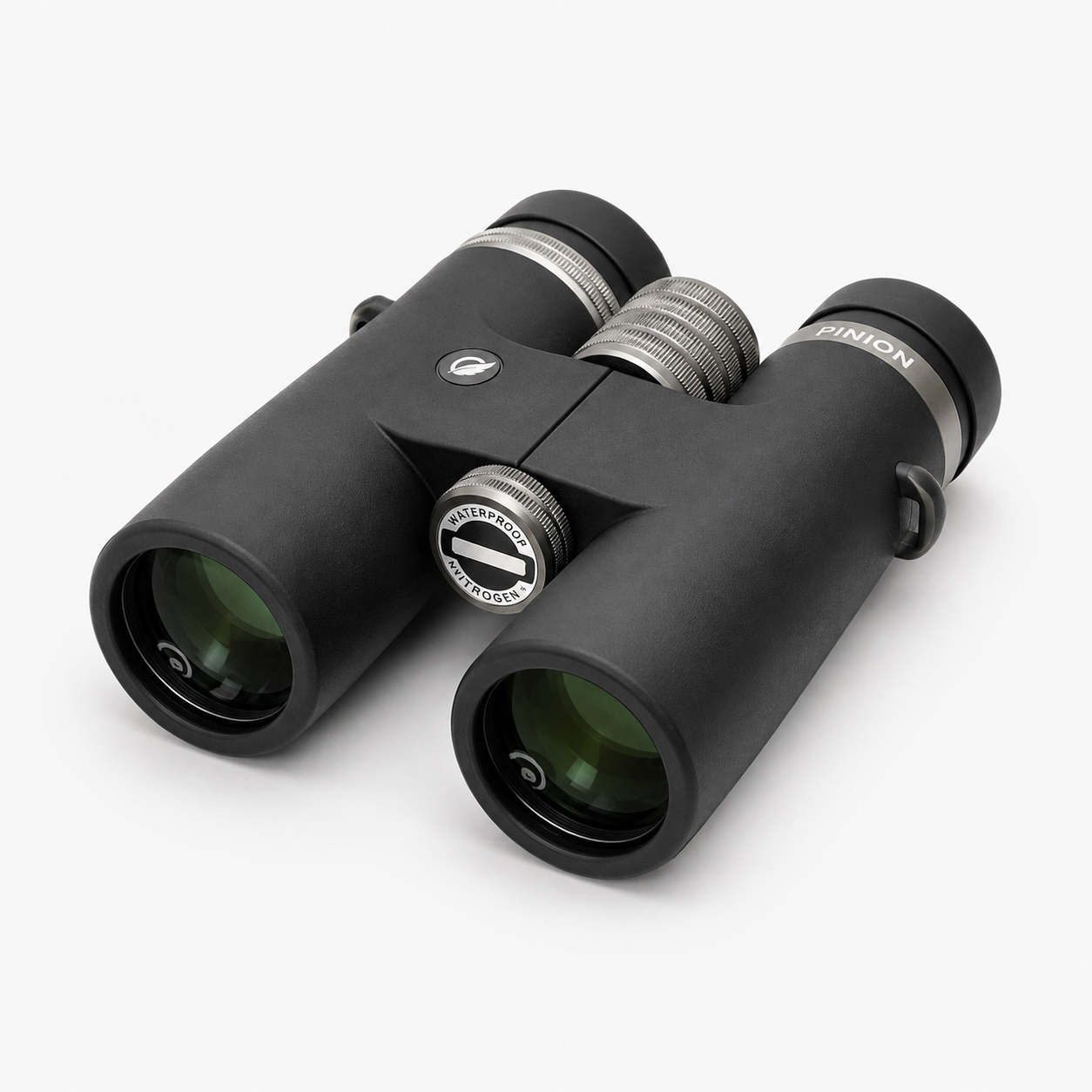
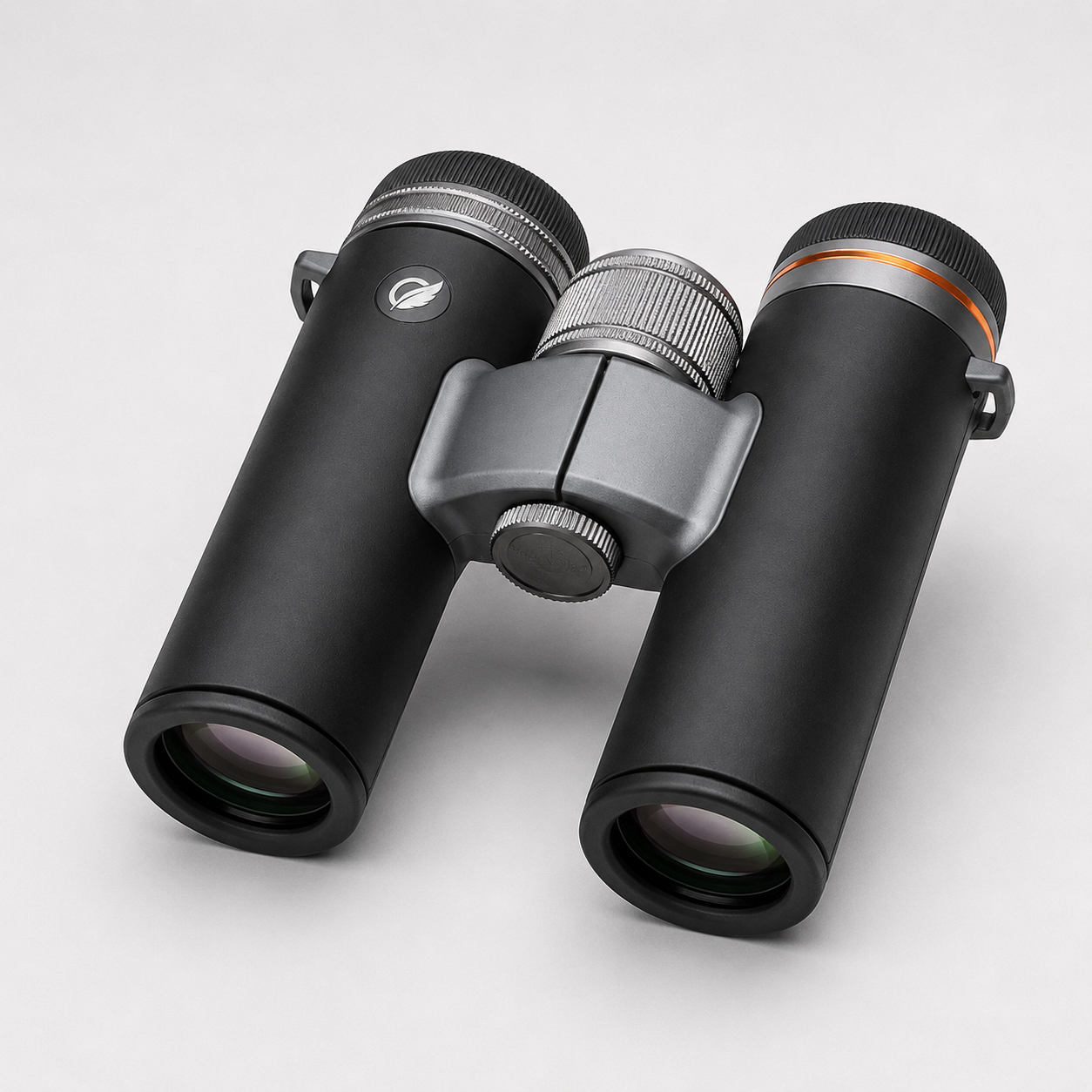
Available as Pinion 8×42 HD and ED.
04
Field of view
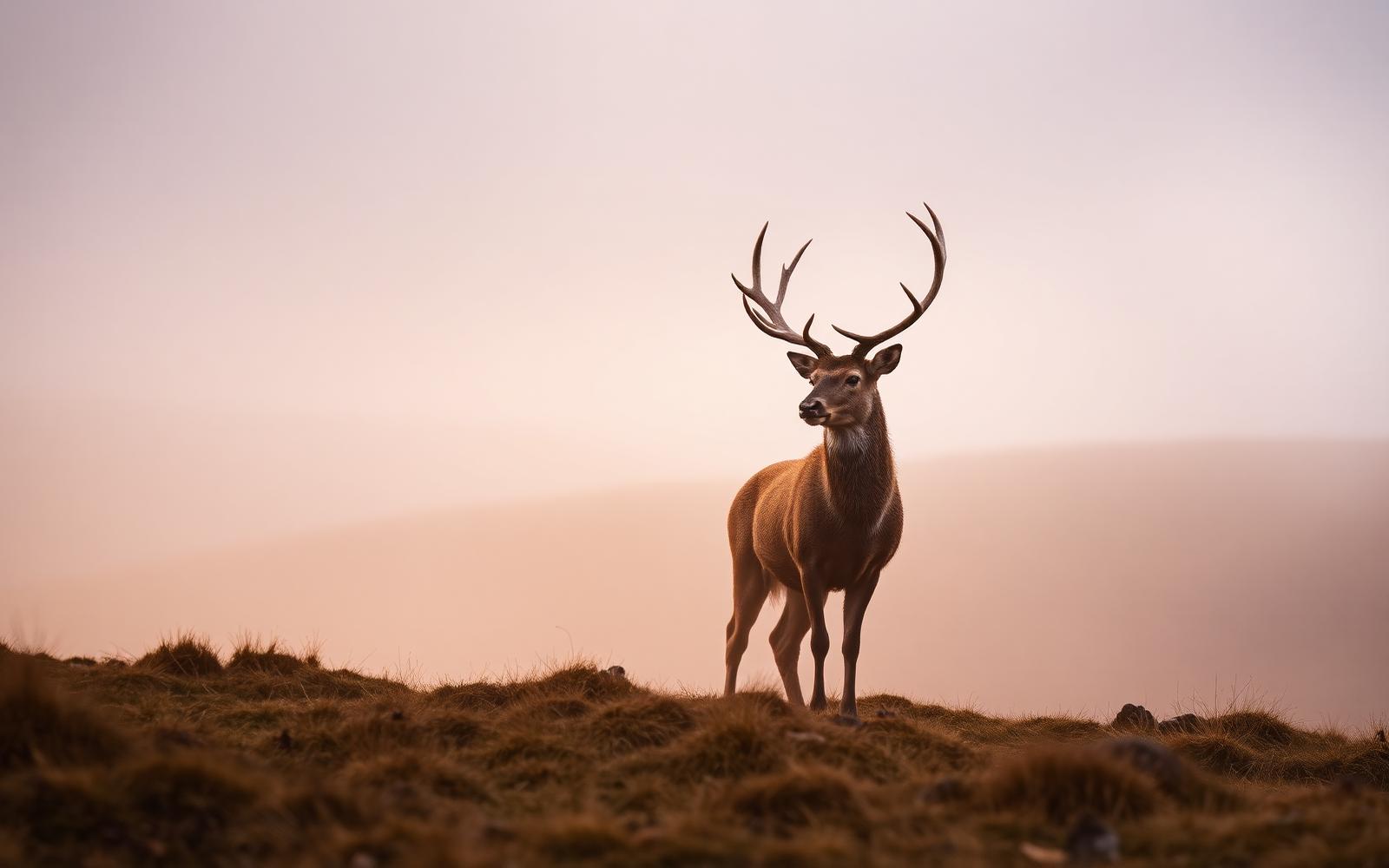
Field of view is how wide a scene you can see, usually quoted in metres at 1000 metres. A wider field makes it far easier to find a bird in a hedge or follow a player across a pitch. Lower magnification generally means a wider field.
Pinion 8×25
91m at 1000m
Pinion 8×42 HD
123m at 1000m
Pinion 10×42 HD
105m at 1000m
Illustrative crops of the same scene. Field of view figures are the published specifications for each model.
05
Glass, prisms and weatherproofing
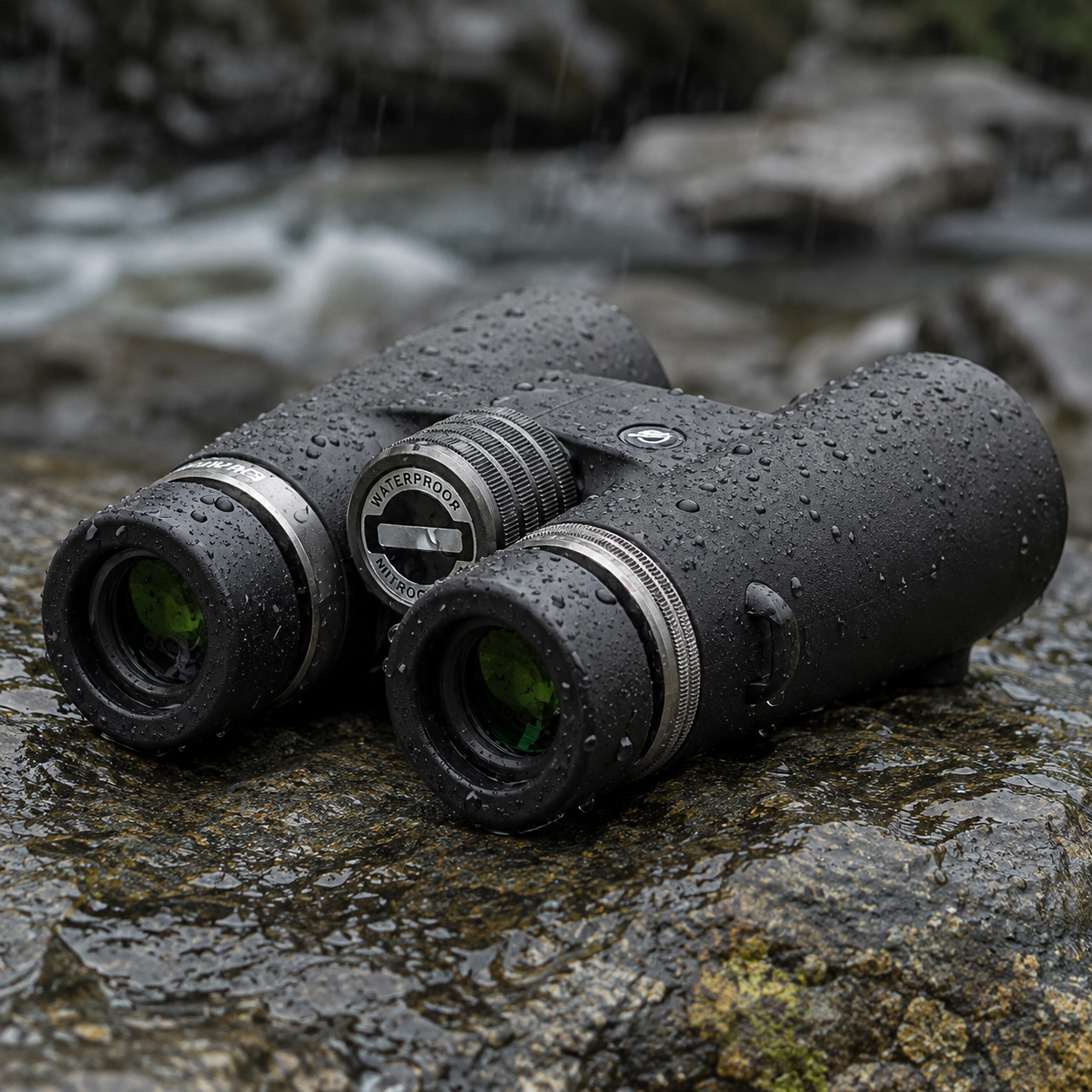
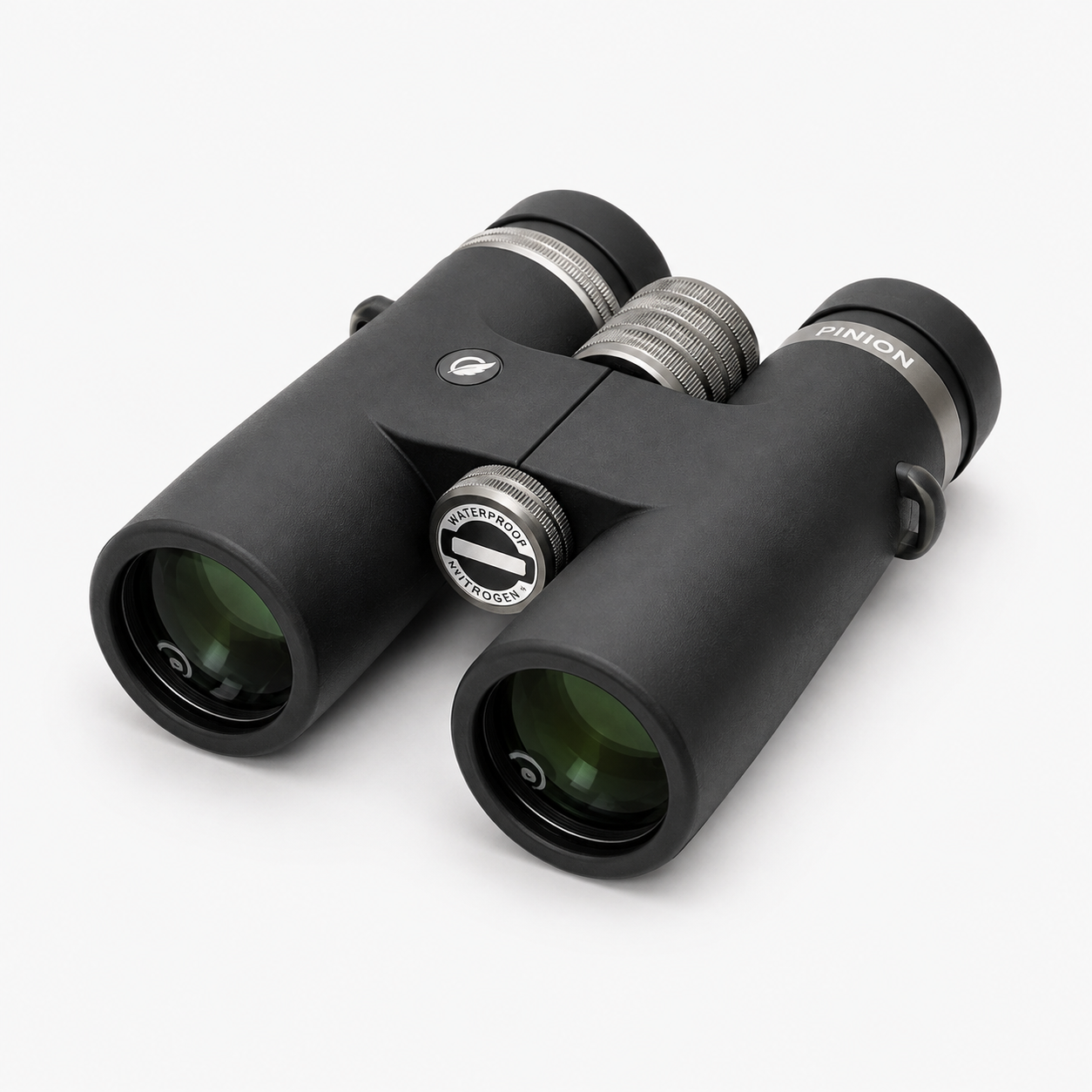
The details that separate a premium optic from a budget one are hidden inside the barrels. Look for BAK 4 roof prisms with phase correction, fully multi coated lenses, and a nitrogen purged, O ring sealed body.
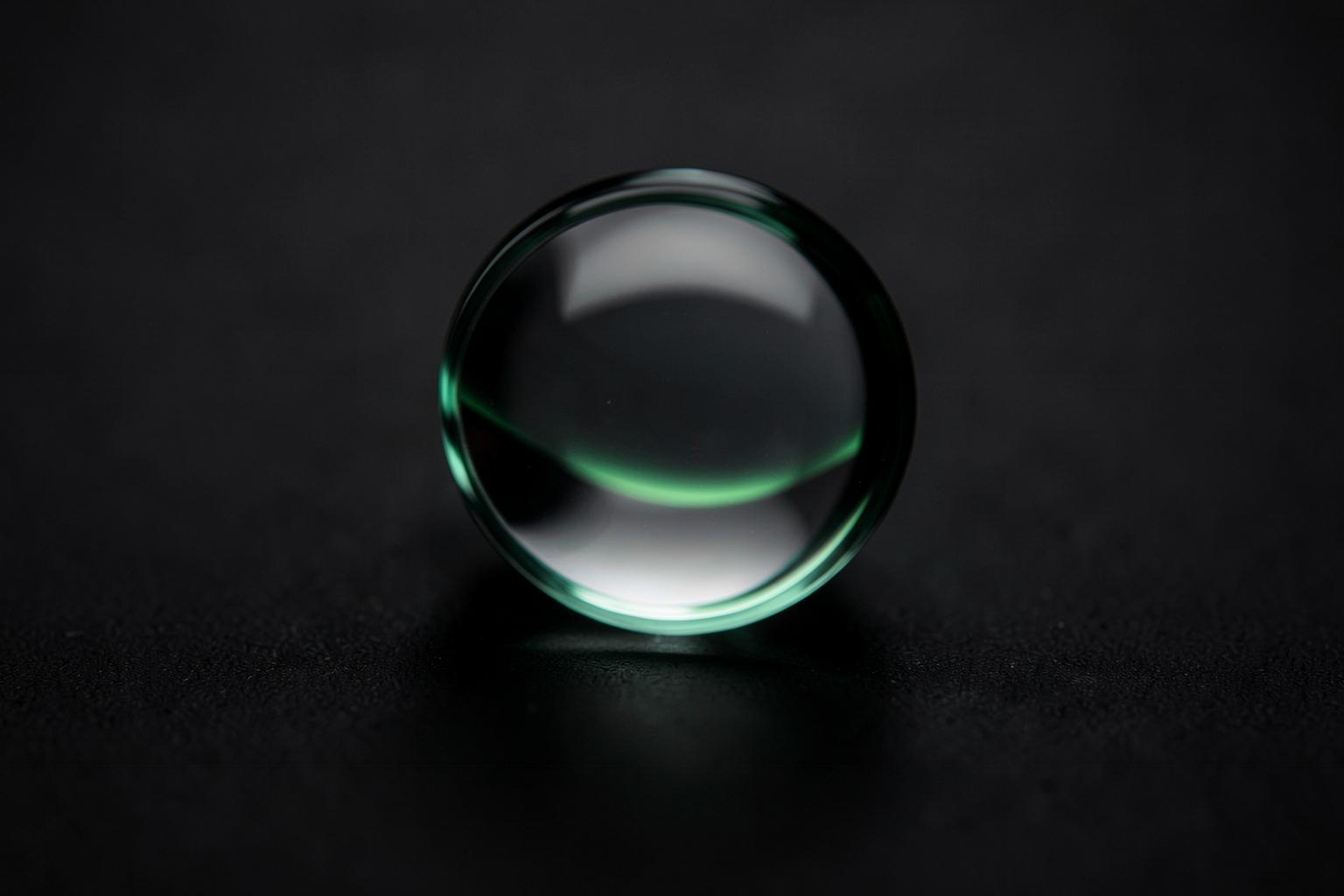
Every Pinion binocular ticks all of those boxes. The main choice you will make is between our HD range and our ED range, which use different glass in the objective lens.
06
Decode any specification
Seen a spec on a box or a listing and want a plain English verdict? Type it in.
Magnification
8×
Objects appear this many times closer
Objective lens
42mm
Full size, around 650 to 750g
Exit pupil
5.3mm
42 ÷ 8. Bigger is brighter
Twilight factor
18
Higher resolves more detail in dim light
Frequently asked questions
Which magnification is best for beginners?+
8× is the classic starting point. It gives a bright, steady view with a wide field, so finding and following a subject is easy.
Is a bigger objective lens always better?+
Bigger lenses gather more light but add weight and bulk. 42mm is the all round sweet spot, 32mm suits travel, 50mm suits low light and long sessions on a tripod or rest.
Do I need waterproof binoculars?+
If you use them outdoors in the UK, yes. Every Pinion binocular is IPX7 rated and nitrogen purged so rain and fog are never a worry.