01
See the difference first
Drag the handle across the scene. The left side shows what standard glass does on a high contrast edge. The right side shows the same edge through extra low dispersion glass. Then adjust the intensity slider to exaggerate or soften the effect.
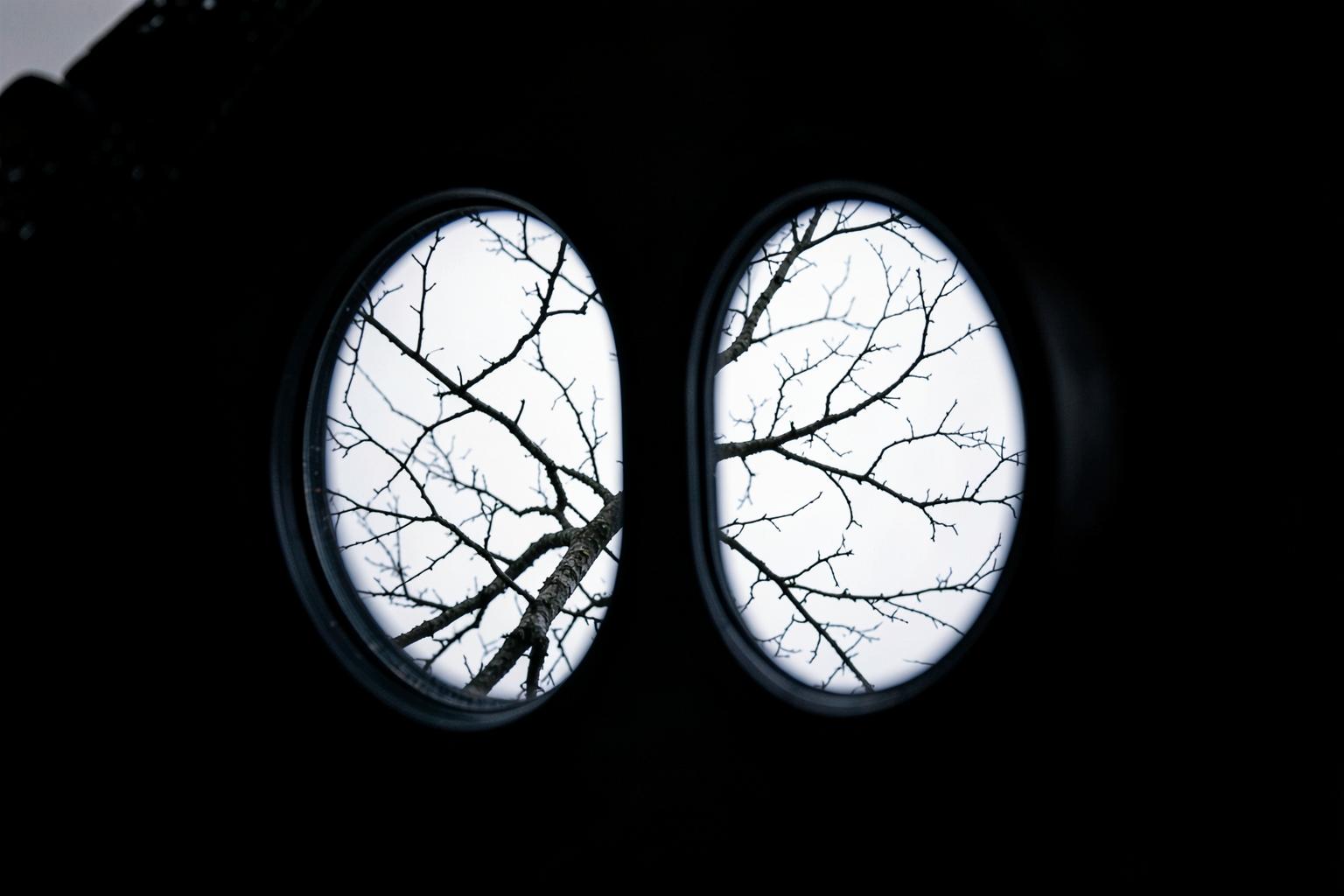
Drag the handle to compare. The effect is simulated and exaggerated so it is visible on a small screen. Real fringing is subtle but tiring over a long watch.
02
Why colour fringing happens
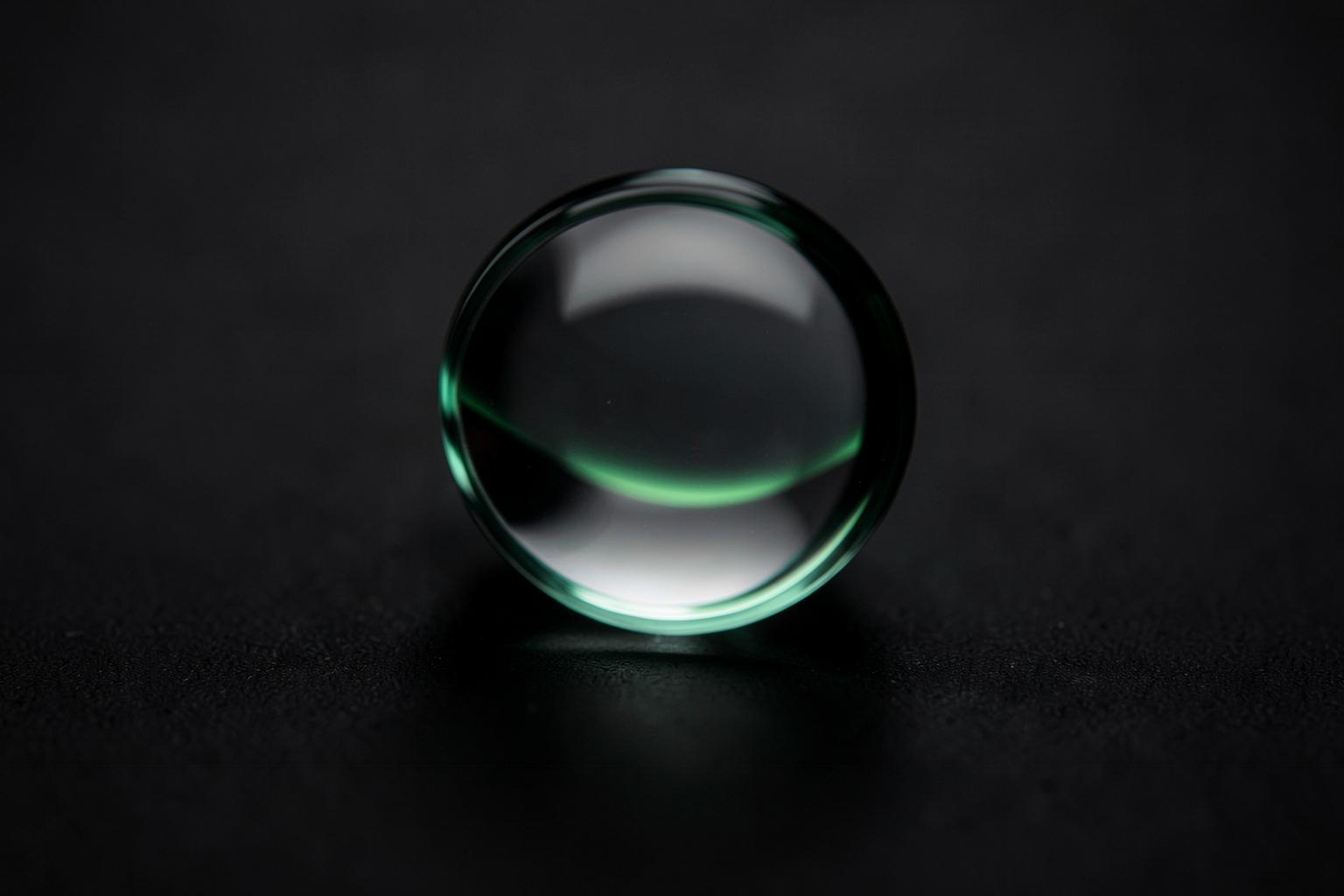
White light is made of many colours, and glass bends each colour by a slightly different amount. Blue bends most, red bends least. In a simple lens that means the colours come to focus at different points, so a sharp black edge picks up a purple or green halo. Opticians call this chromatic aberration. Most people just call it fringing.
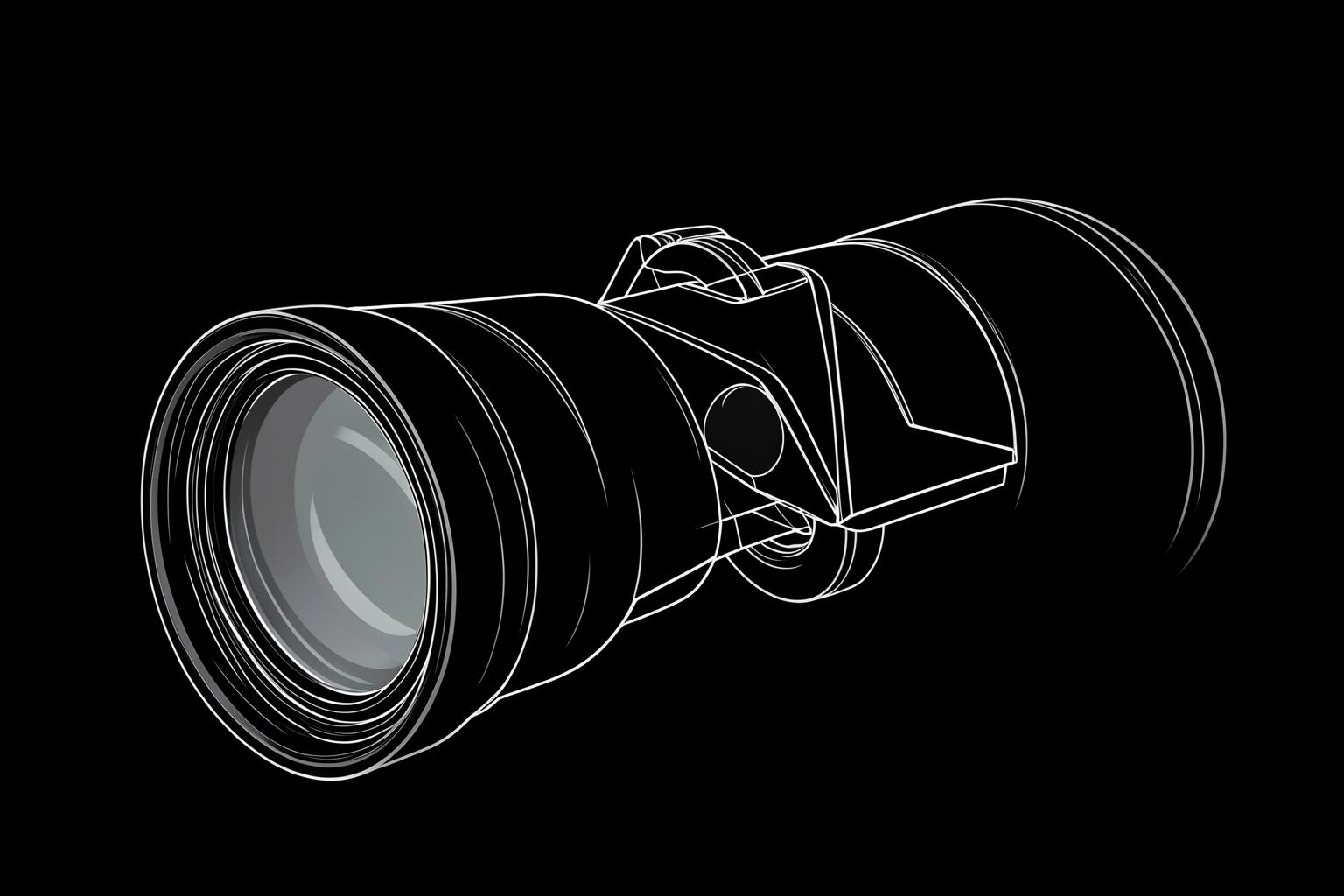
Light path through the objective
Blue light bends more than red, so each colour focuses at a different distance. Wherever the eyepiece is set, two of the three colours are slightly out of focus and spill over sharp edges as a coloured halo.
Extra low dispersion glass is formulated so that it spreads the colours far less. Pair it with a matching element and the red, green and blue rays land almost exactly on the same point. Edges stay crisp, colours stay true, and fine detail like feather barbs or aircraft registrations remains legible.
03
What HD means at Pinion
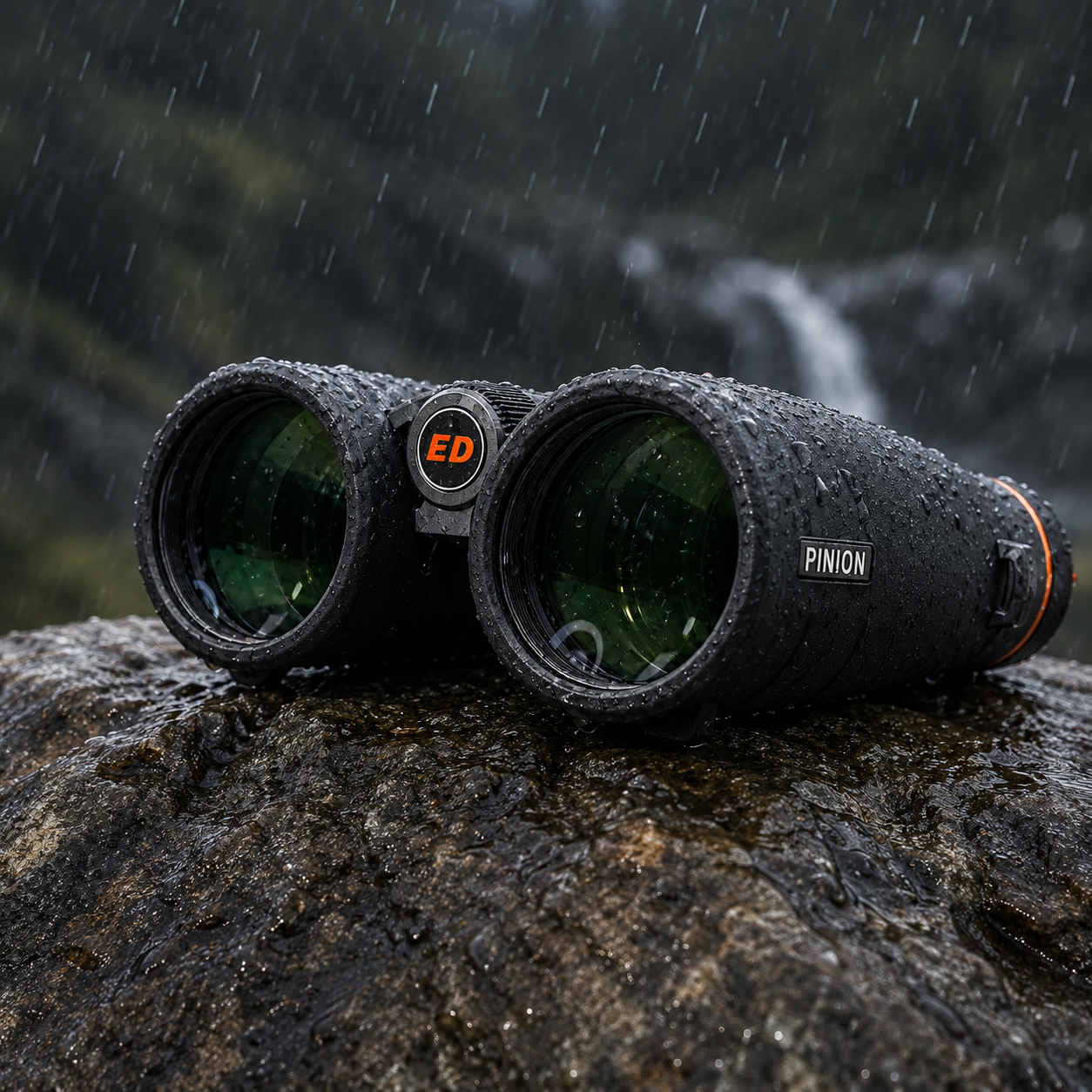
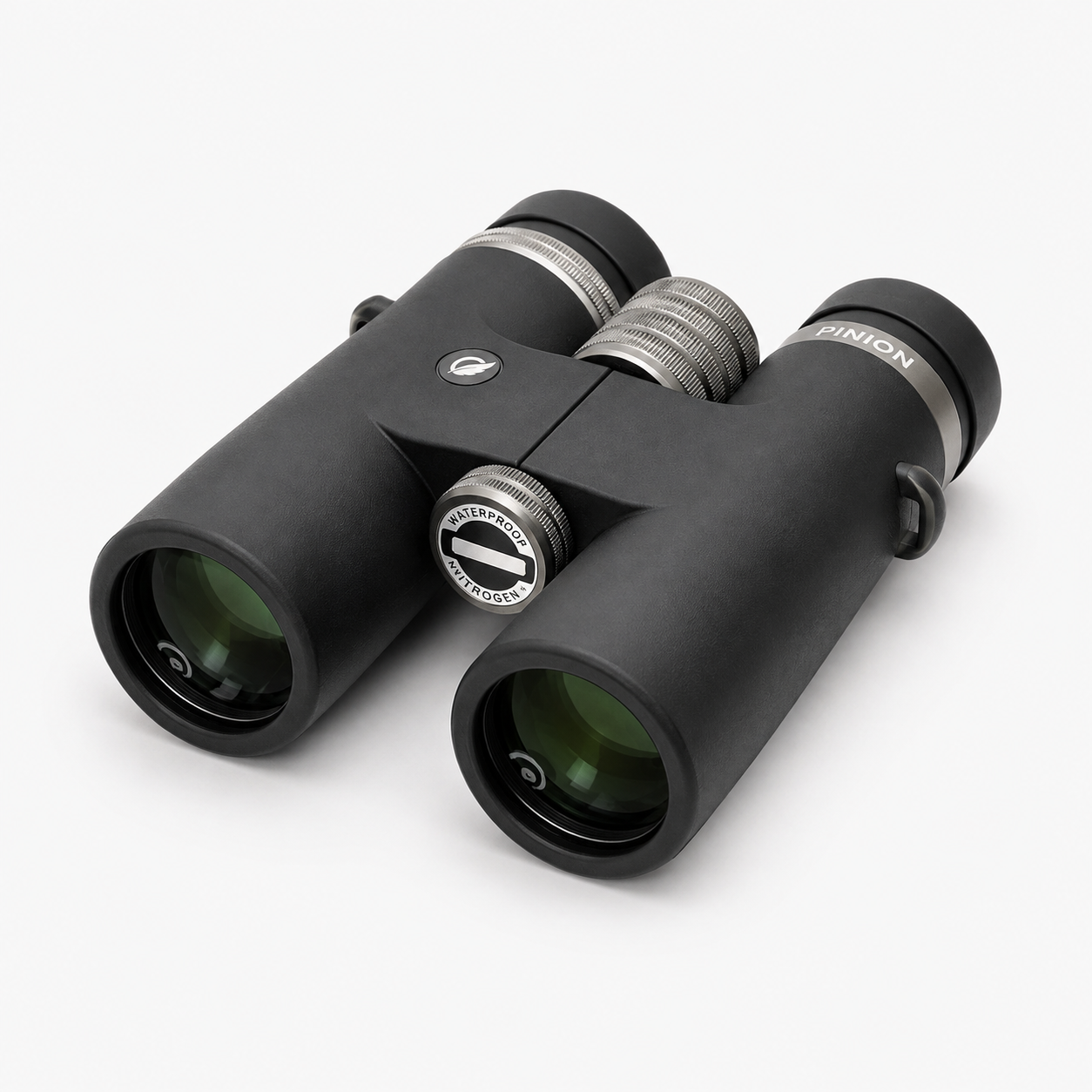
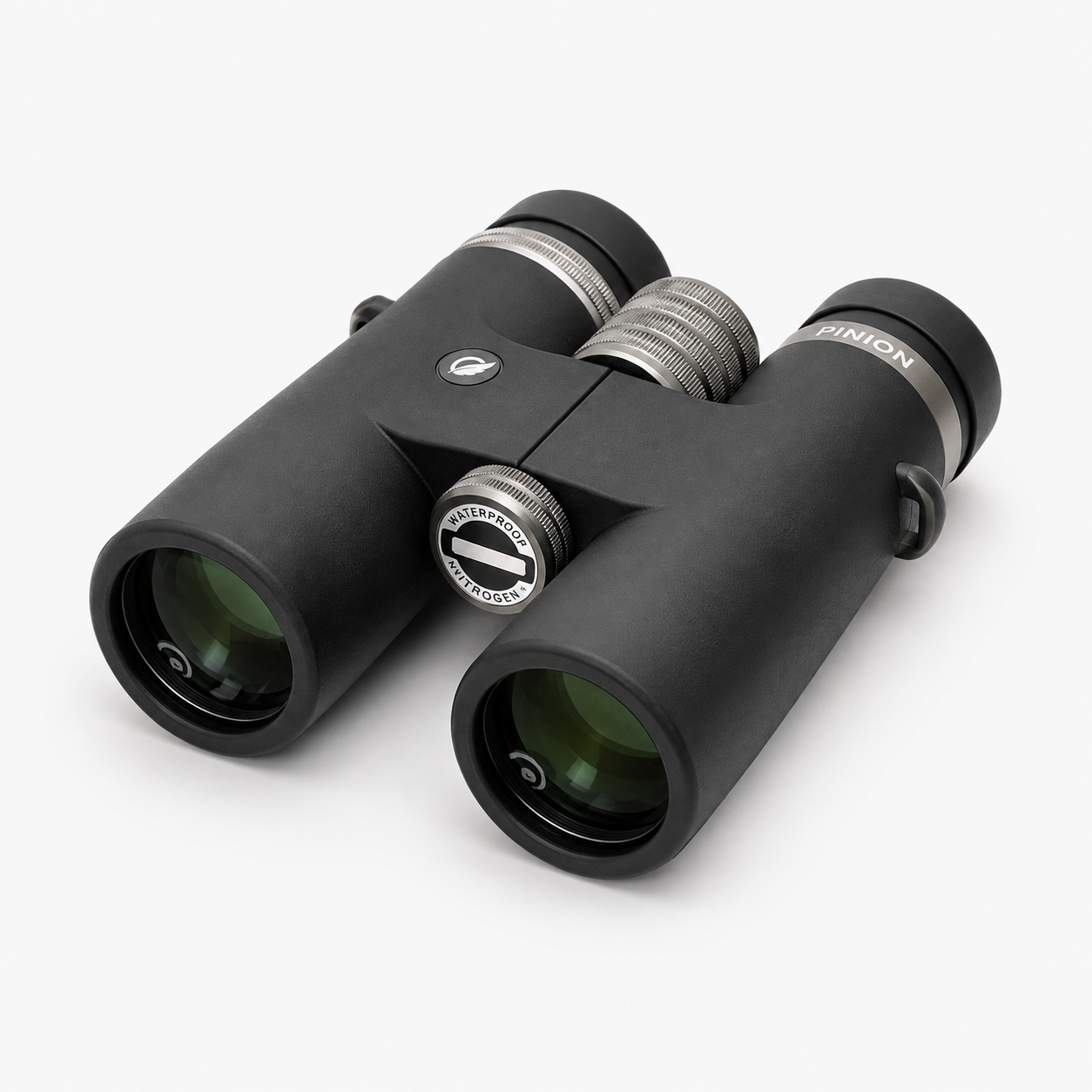
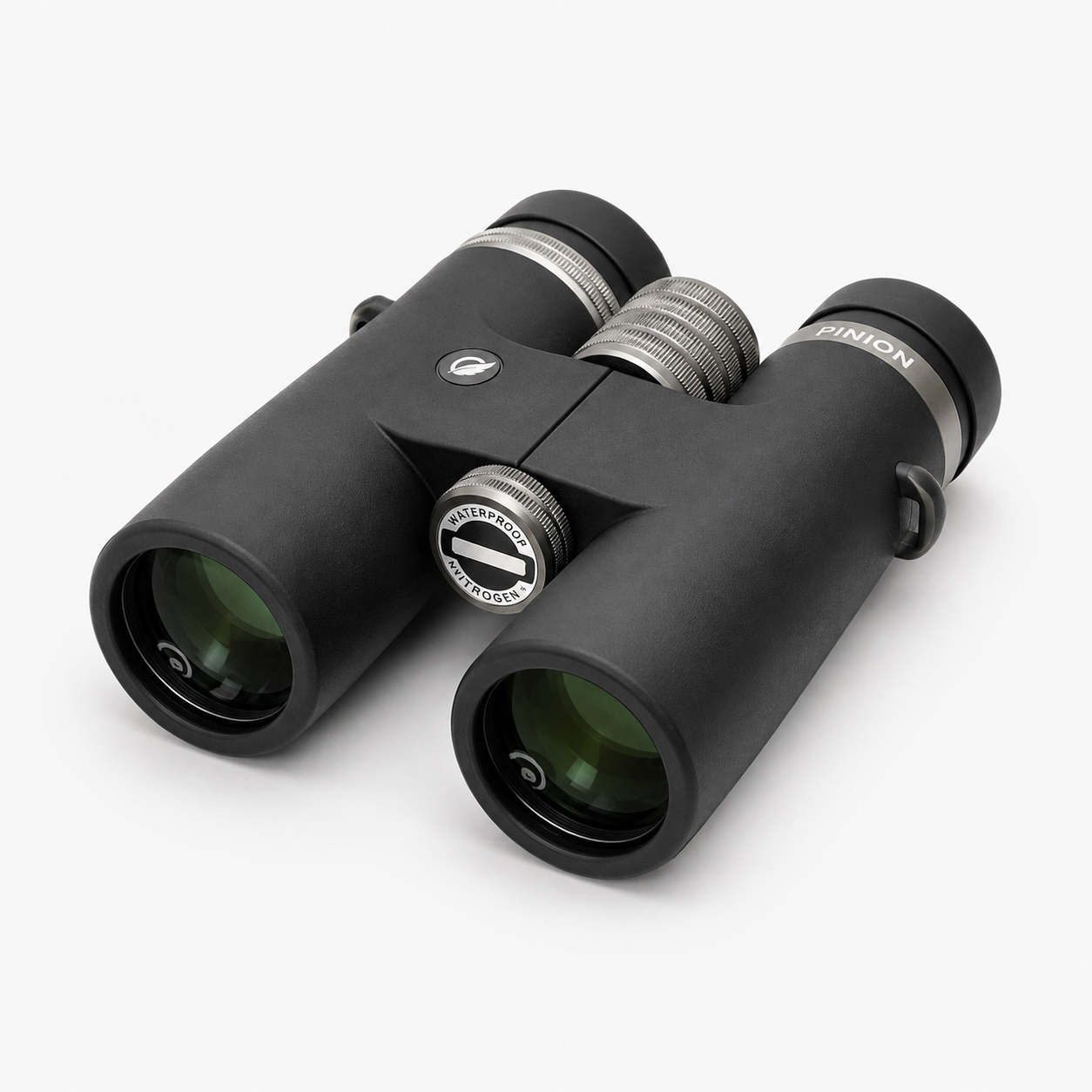
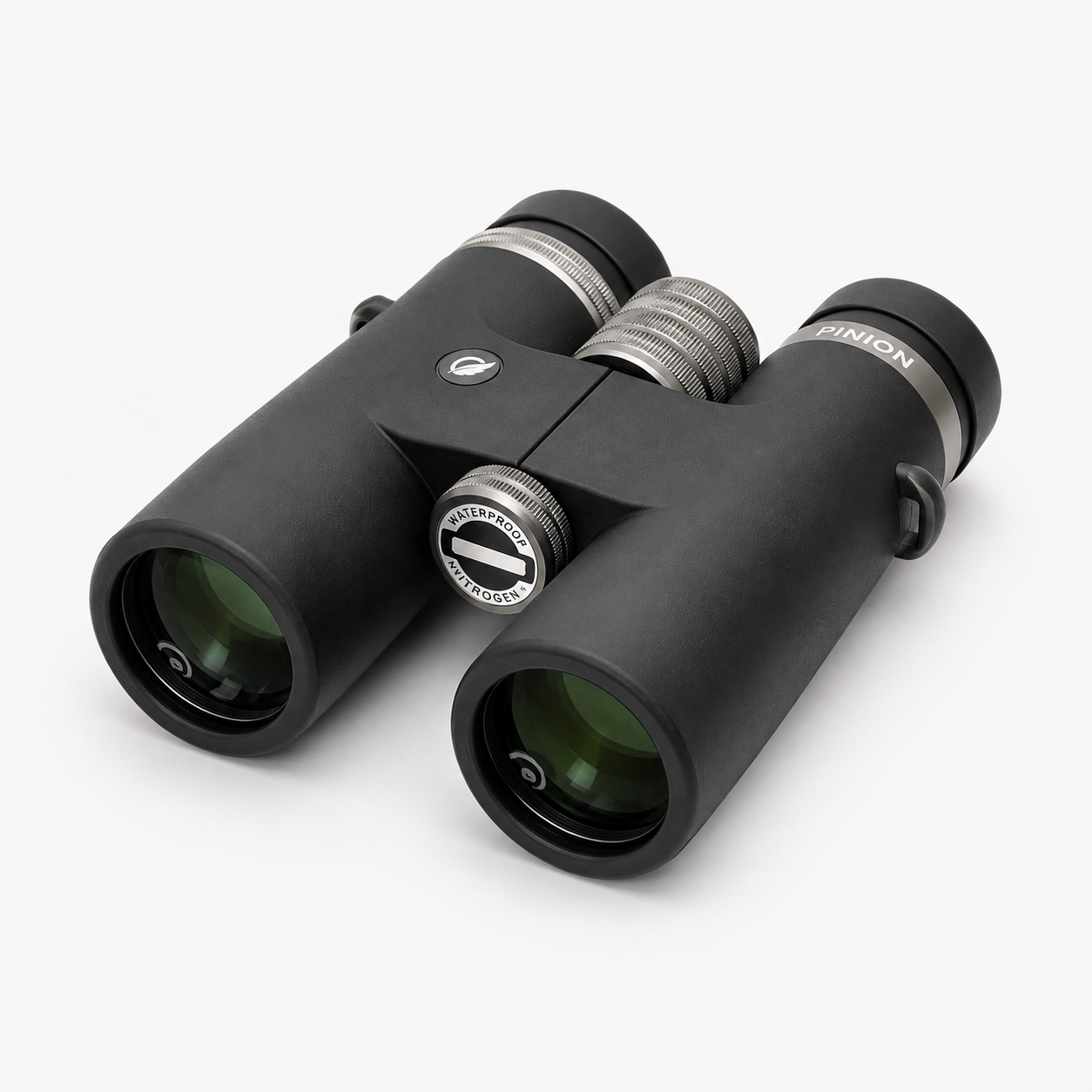
HD in our range stands for high definition. These models use fully multi coated lenses on every air to glass surface, BAK 4 roof prisms with phase correction coatings, and the same IPX7 waterproof, nitrogen purged bodies as the ED range. They are excellent binoculars and the right choice for most people.
04
What ED adds
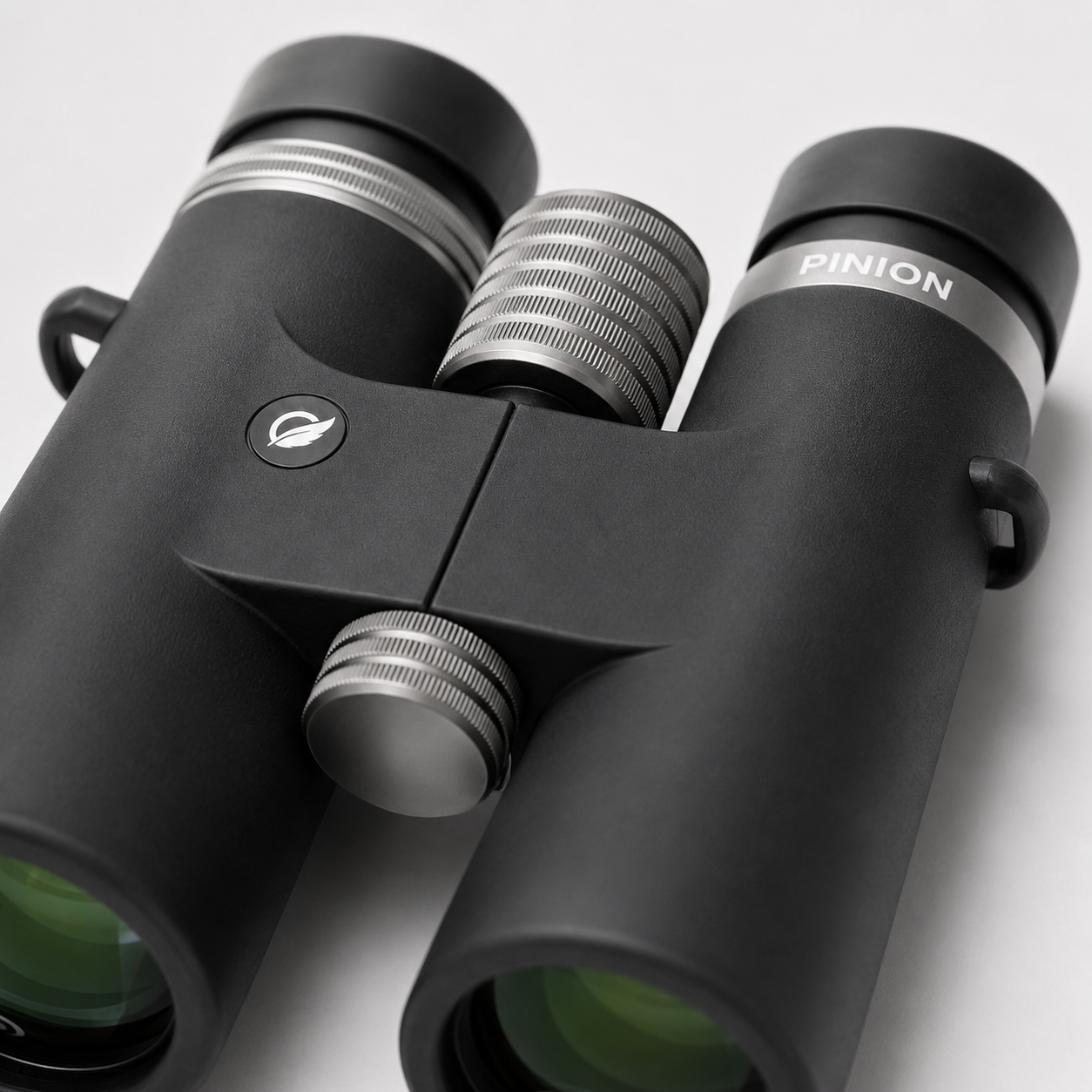
ED models add an extra low dispersion element in the objective lens group. That is the part of the binocular that does most of the work forming the image, so it is where dispersion control pays off most.
- 01
Cleaner edges
Dark subjects against bright sky show almost no purple or green halo.
- 02
Higher contrast
Less scattered colour means blacks stay black and fine texture stands out.
- 03
Truer colour
Plumage, paintwork and skin tones look natural rather than slightly warm or cool.
- 04
Better at 10× and above
Fringing scales with magnification, so ED is most valuable on 10× and 12× models.
05
When HD is enough and when ED is worth it
When HD is enough
- Garden and woodland birding in soft light
- Walking, travel and general sightseeing
- Matchday, concerts and events
- A first serious binocular on a sensible budget
Fully multi coated, phase corrected BAK 4, IPX7. You get the same body and weatherproofing as ED and a very sharp image in the conditions most people use binoculars in.
06
Side by side specifications
Each HD model has a direct ED twin. Body, prisms, weatherproofing and warranty are the same. Here is what actually changes.
| Model | Glass | Field of view | Eye relief | Close focus | Weight | RRP |
|---|---|---|---|---|---|---|
| Pinion 8×32 HD | High definition | 135m at 1000m | 17mm | 1.5m | 678g | £115 |
| Pinion 8×32 ED | Extra low dispersion | 132m at 1000m | 17mm | 2m | 710g | £149 |
| Pinion 10×32 HD | High definition | 110m at 1000m | 14.5mm | 1.5m | 664g | £125 |
| Pinion 10×32 ED | Extra low dispersion | 110m at 1000m | 14.5mm | 2m | 664g | £159 |
| Pinion 8×42 HD | High definition | 123m at 1000m | 17mm | 1.4m | 710g | £149 |
| Pinion 8×42 ED | Extra low dispersion | 122m at 1000m | 17mm | 1m | 710g | £179 |
| Pinion 10×42 HD | High definition | 105m at 1000m | 15mm | 1.5m | 780g | £159 |
| Pinion 10×42 ED | Extra low dispersion | 105m at 1000m | 15mm | 1.2m | 780g | £189 |
Frequently asked questions
Is HD glass bad?+
Not at all. Pinion HD models use fully multi coated optics and phase corrected BAK 4 prisms. They are sharp, bright and a big step up from budget binoculars. ED simply goes further on the hardest scenes.
Will I notice the difference between HD and ED?+
In soft light, rarely. Against a bright sky, on white birds, aircraft, snow or water sparkle, ED shows cleaner edges and truer colour. Digiscopers and serious birders notice it most.
Does ED glass make the image brighter?+
Slightly, because less light is scattered into fringes, but the main gains are sharpness, contrast and colour accuracy.