01
The problem prisms solve
An objective lens on its own forms an image that is upside down and back to front. A telescope you point at the sky can live with that. Binoculars cannot. The prism assembly between the objective and the eyepiece flips the image the right way up and the right way round, and it folds the light path so the binocular can be shorter.
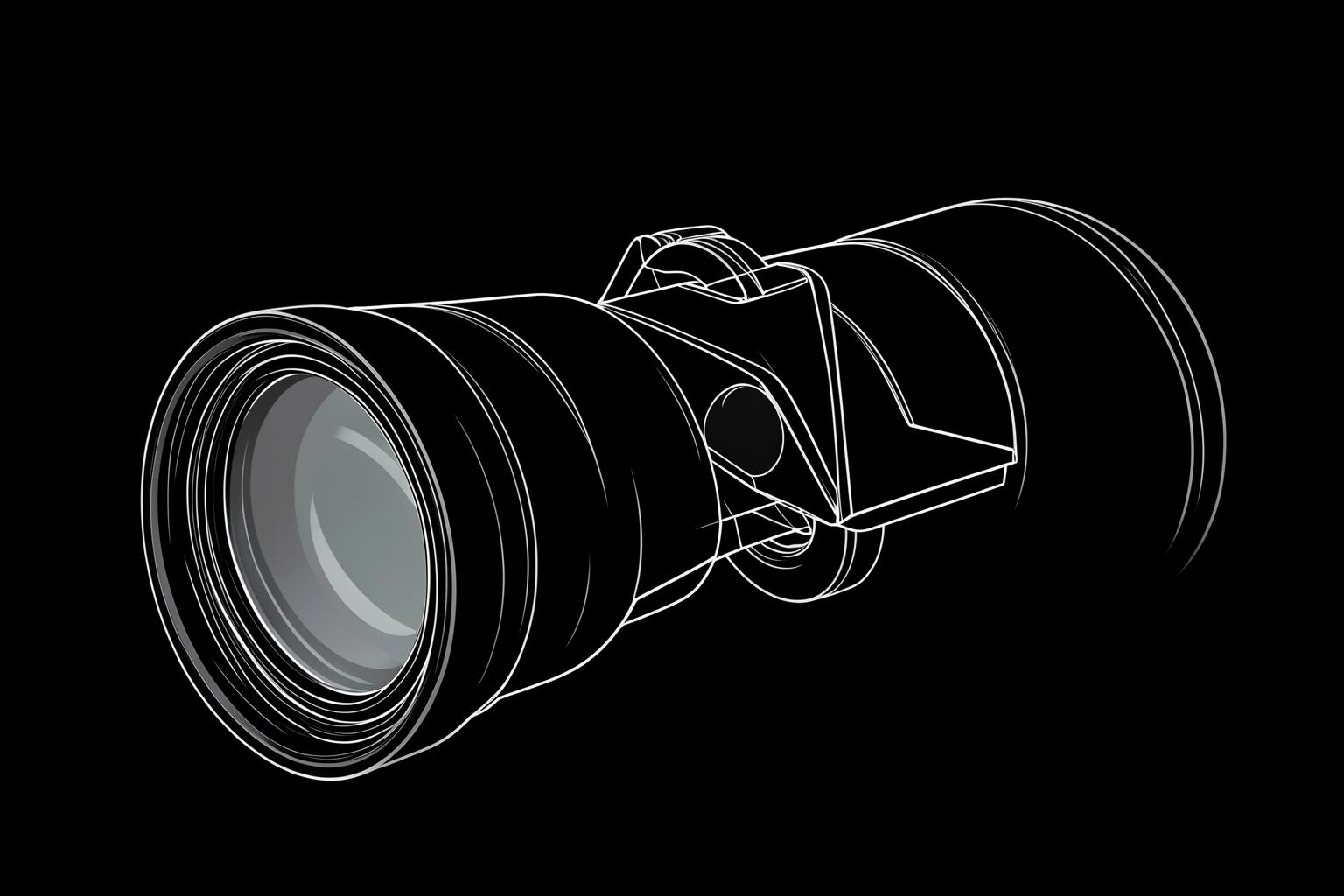
Toggle between the two prism designs to watch the light travel through each one.
Roof prism (Schmidt Pechan)
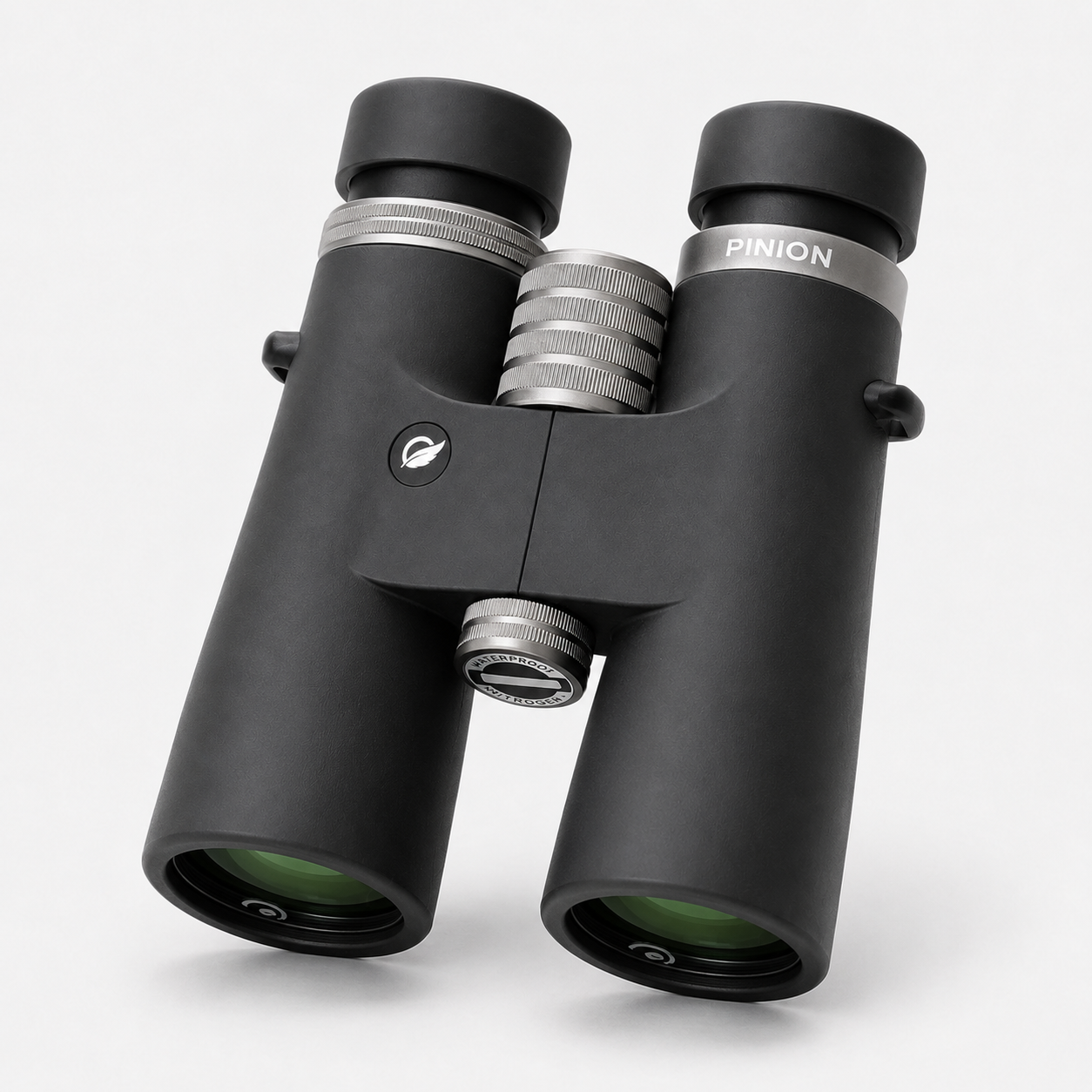
The light folds back on itself inside two compact prisms that sit in line with the objective and eyepiece. That is why roof prism binoculars have straight barrels. The roof edge splits the beam in half and rejoins it, which is where phase correction coatings are needed.
02
Roof vs Porro
| Roof prism | Porro prism | |
|---|---|---|
| Body shape | Straight, slim barrels | Wide, stepped barrels |
| Weight and size | Lighter and more compact | Bulkier |
| Sealing | Easier to seal and nitrogen purge | Harder to seal well |
| Manufacturing | Needs very precise roof edge and coatings | Simpler tolerances |
| Pinion range | All models | None |
03
BAK 4 glass and the exit pupil
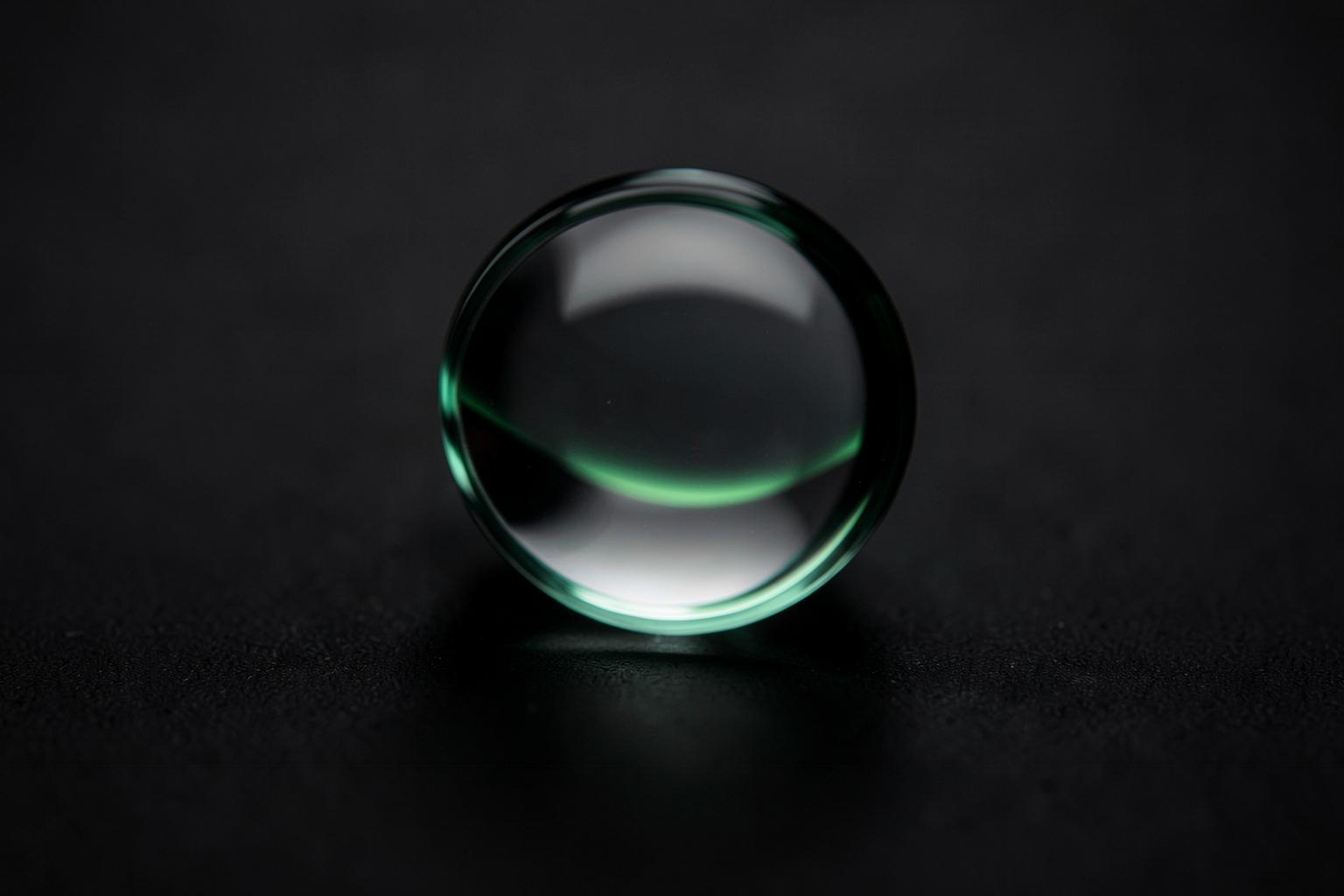
Prisms are made from optical glass, and the type matters. Cheaper BK7 glass has a lower refractive index, so light hitting the prism at a steep angle leaks out and is lost. The result is a squared off exit pupil and dim edges. BAK 4 glass keeps every ray inside, giving a perfectly round exit pupil and even brightness to the edge of the view. Hold a binocular at arm's length against the sky and look at the little bright circle in the eyepiece: you can see it for yourself.
04
Phase correction and coatings
Roof prisms have one quirk. The light path splits in two at the roof edge and rejoins, and the two halves arrive slightly out of step with each other. Left untreated, that phase shift softens fine detail and lowers contrast. A phase correction coating on the roof surfaces brings the two halves back into step.
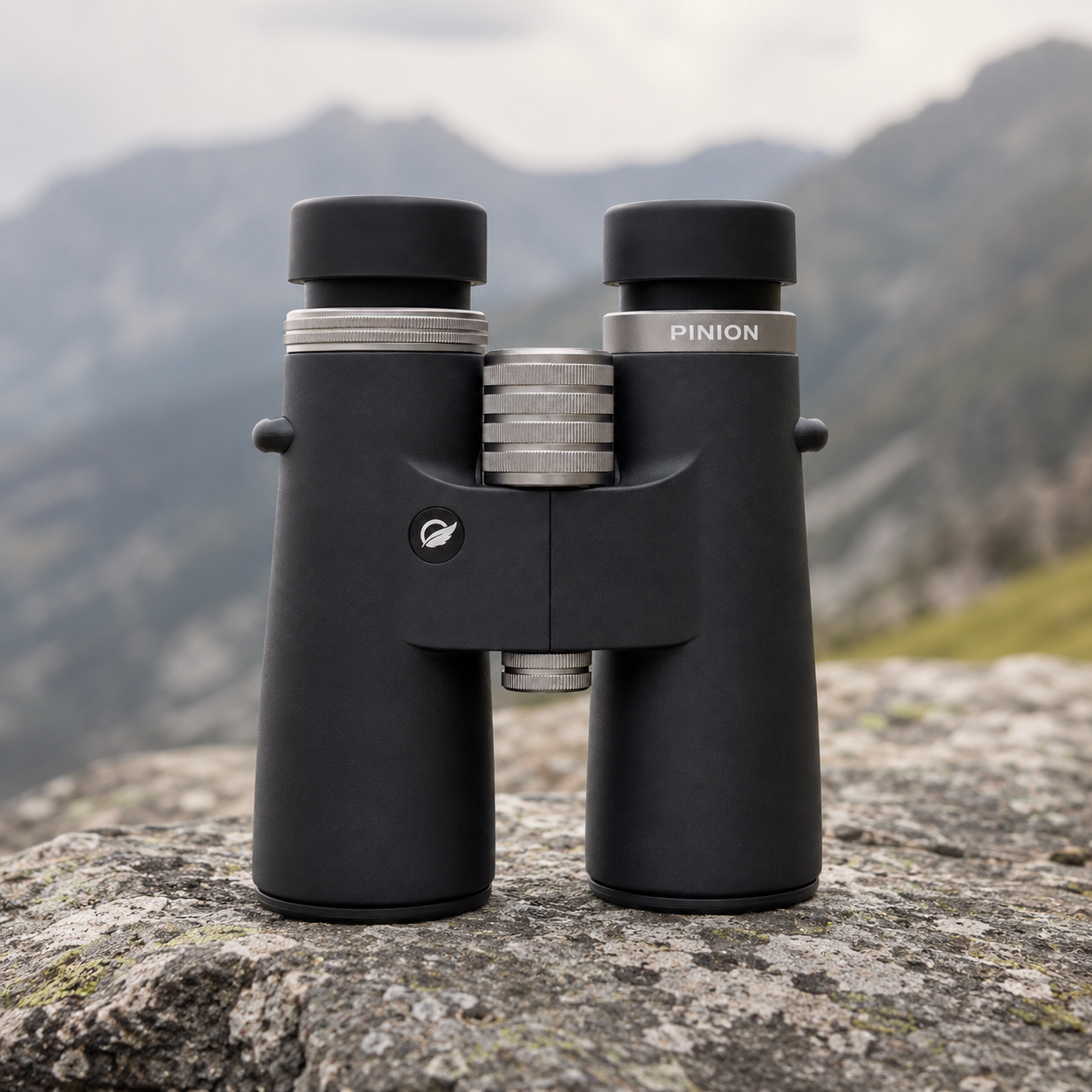
One surface in a roof prism also needs a mirror. Aluminium reflects around 90 percent of the light, silver around 95 percent, and a multi layer dielectric coating over 99 percent across the whole spectrum. Pinion uses phase corrected BAK 4 prisms throughout the range.
Prism coatings
Both halves of the beam arrive in step and over 99 percent of the light is reflected. Contrast and micro detail are preserved.
Frequently asked questions
Are roof prisms better than Porro prisms?+
Neither is better in every way. Roof prisms allow a slimmer, tougher, easier to seal body. Porro prisms are simpler to make well. All Pinion binoculars use roof prisms with phase correction so you get the compact body without losing contrast.
What does BAK 4 mean?+
It is a type of barium crown glass with a high refractive index. It keeps the whole light cone inside the prism, so the exit pupil is fully round and the edges of the view stay bright.